KataJam frontend katas
Micro-frontends and five rendering strategies, each measured against the same tests
The code lives in a private repository; this sheet and the demo, when there is one, show the work.
- Status
- Live demo
- Type
- Experiment
- Period
- November 2026 – November 2026
- Role
- Architect and sole engineer
- Domains
- frontend, architecture, performance, accessibility
- Stack
- React, Svelte, Module Federation, Rsbuild, Astro, Nextjs, TypeScript, Playwright, Lighthouse
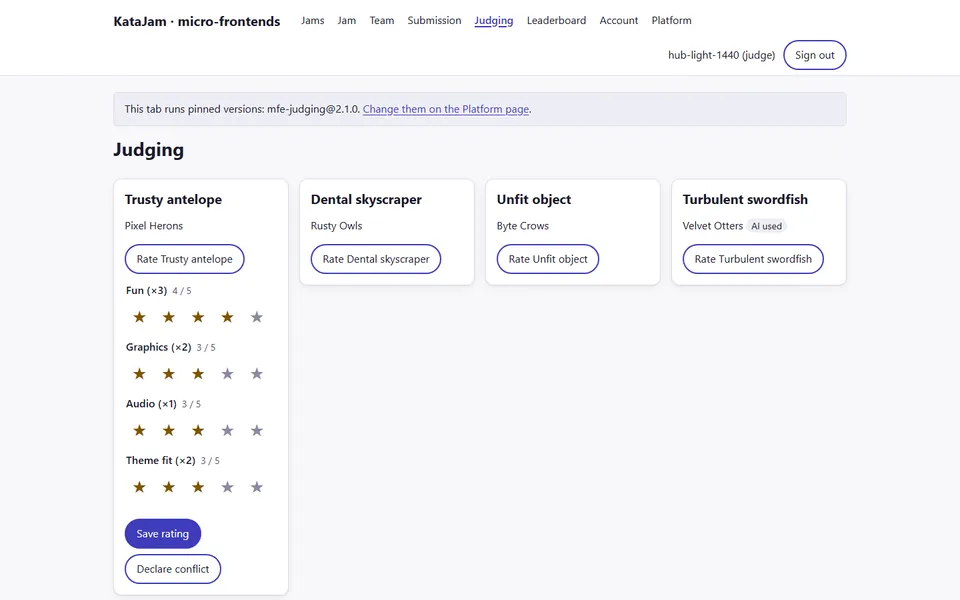 KataJam frontend katas Live demo
Micro-frontends and five rendering strategies, each measured against the same tests
Experiment
Context and problem
Teams pick micro-frontends for independent deploys, and a rendering strategy by fashion, without knowing the price. Assumption: the same app built each way, with the same data and tests, shows what each choice wins and loses.
Screens
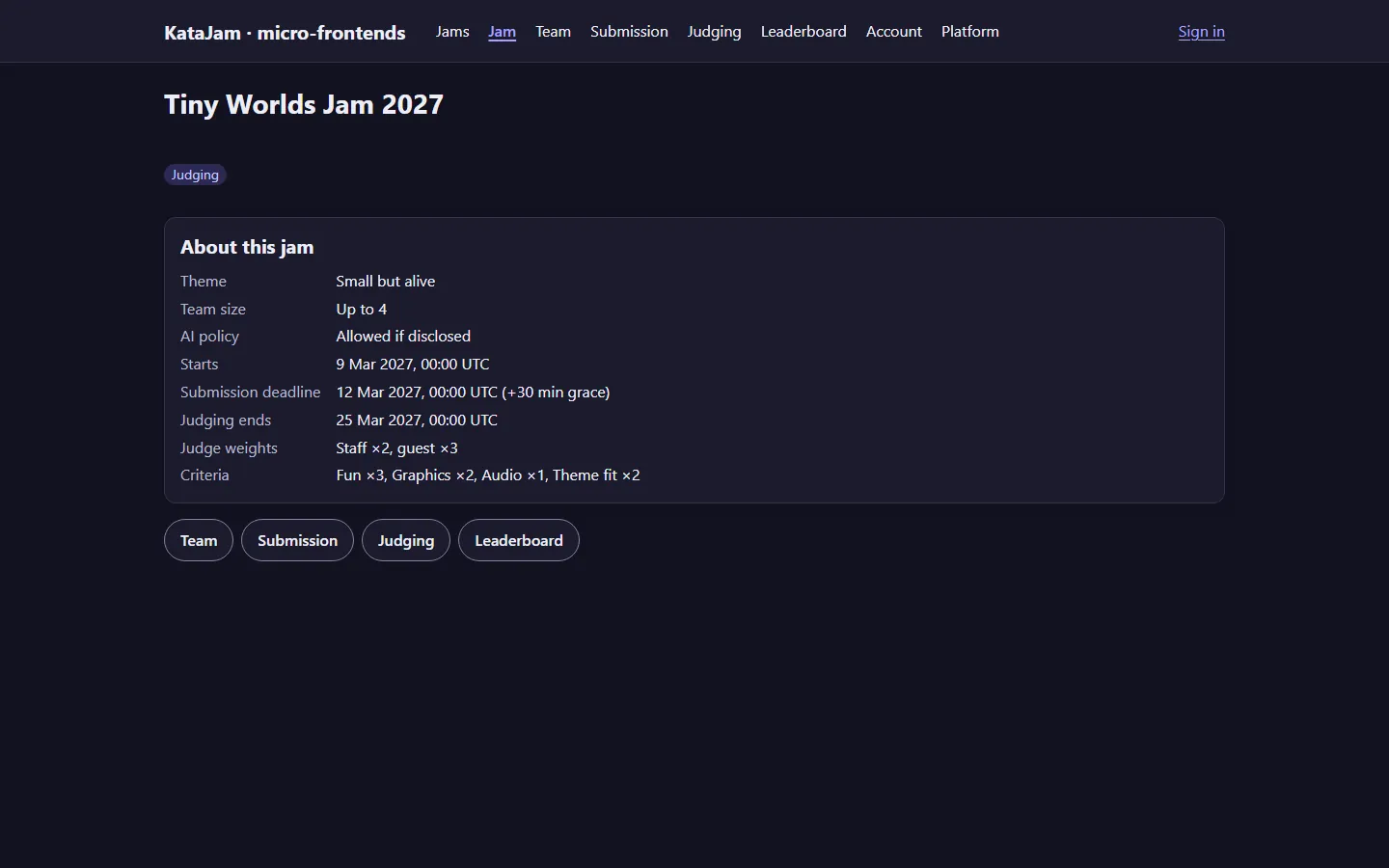
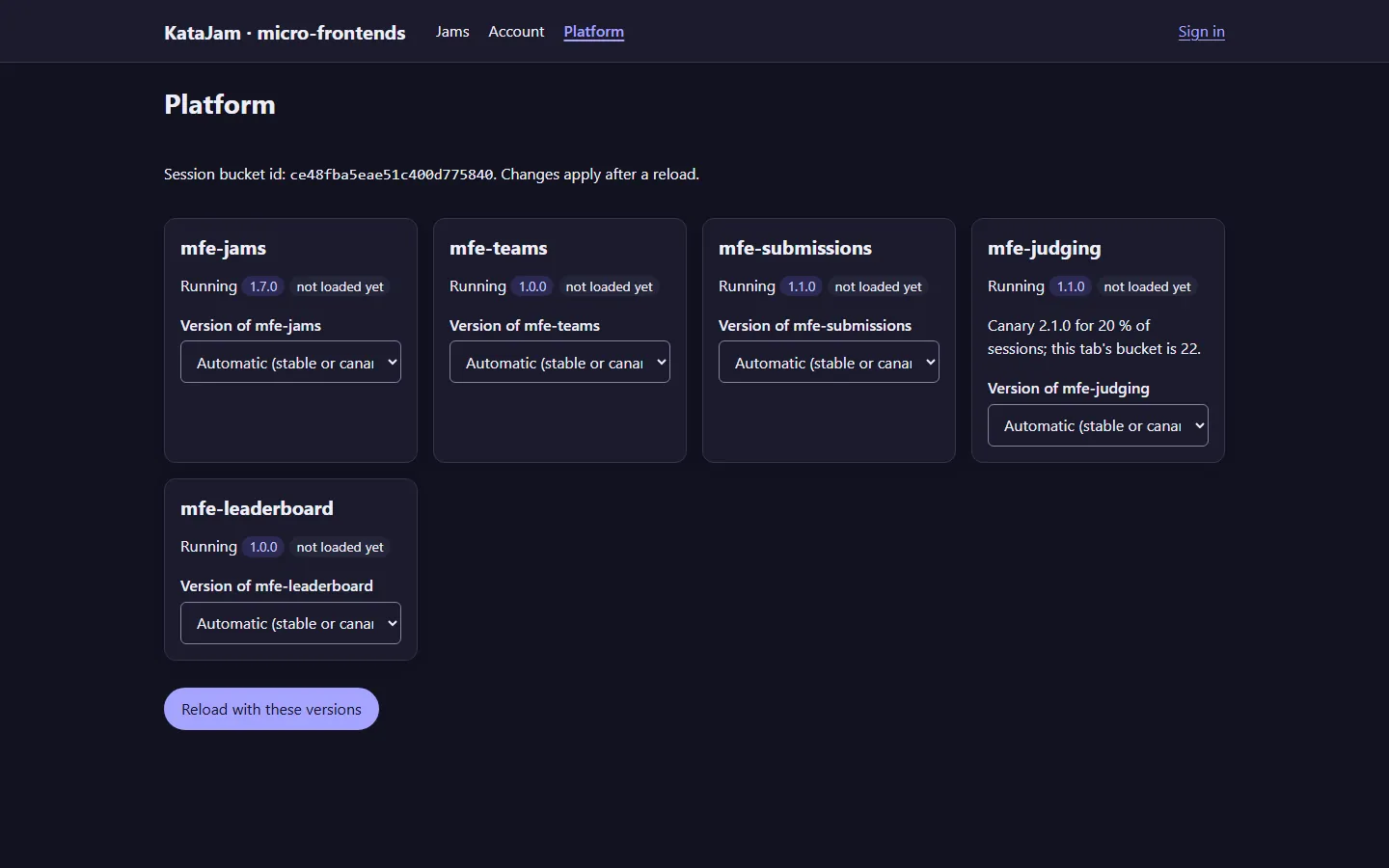
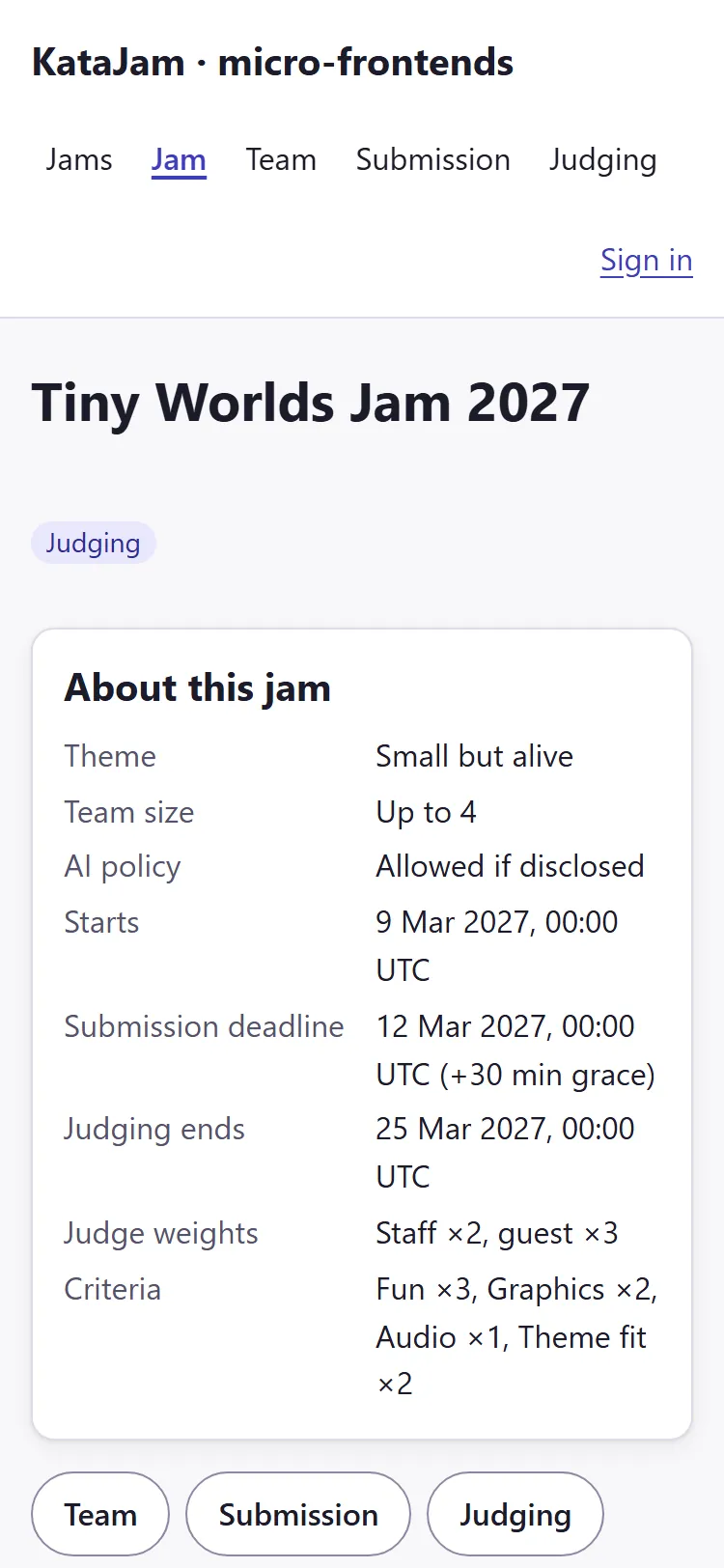
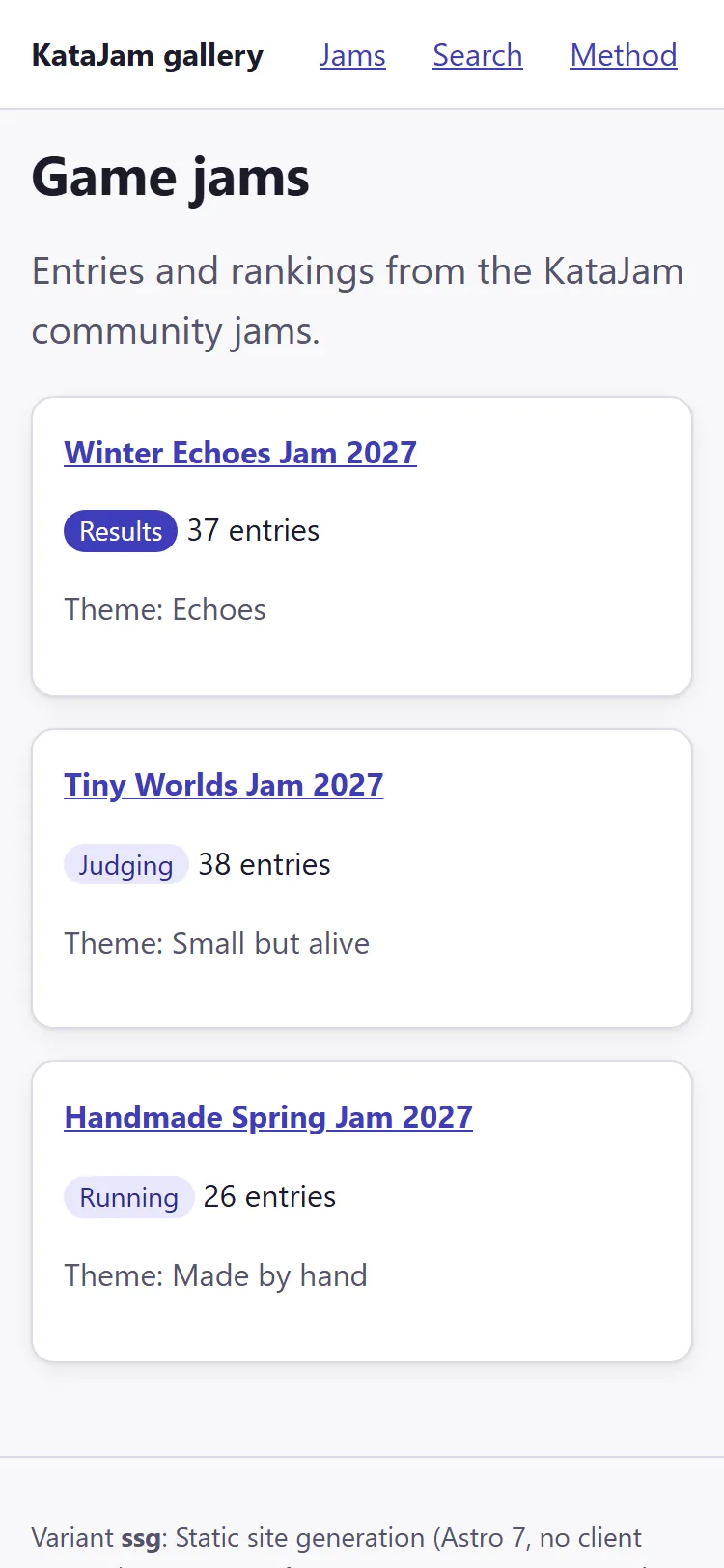
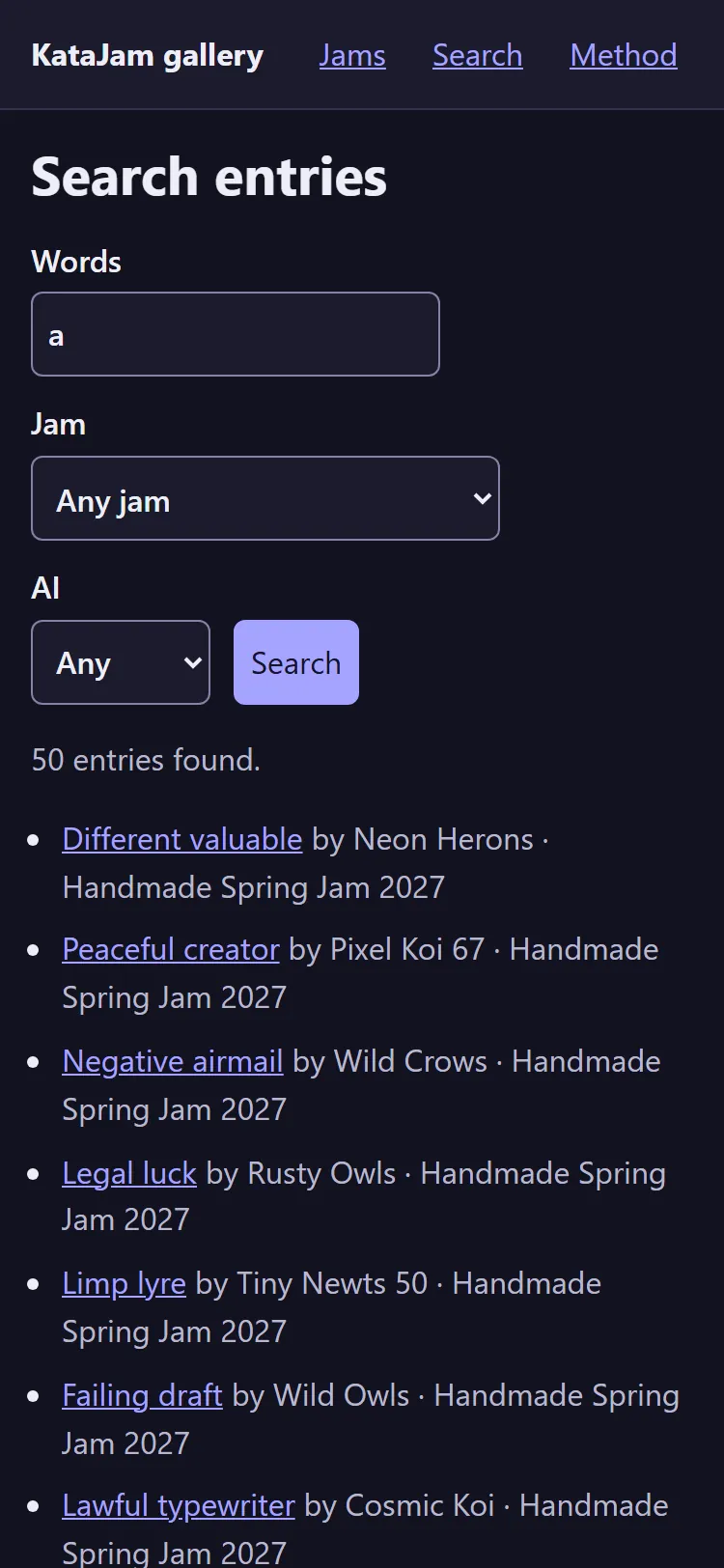
How it was built
2 repos · 318 tests · 8 audits
From the build report, 21 November 2026.
Results
Outcomes as stated in the manifest; the measured figures are the ones with a date.
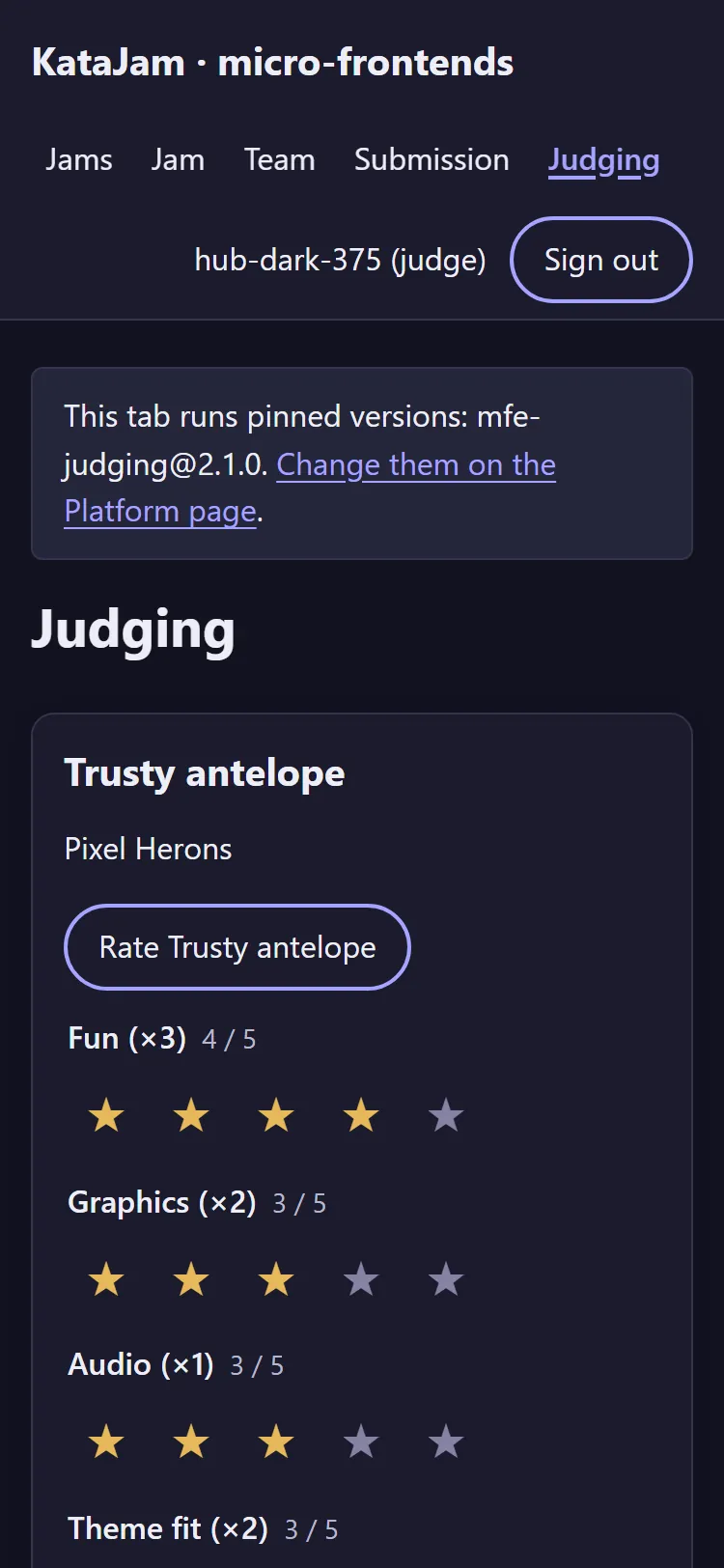
- L21: a shell and five remotes (one in Svelte) compose at run time from a versioned registry; the same 19 user flows pass on the micro-frontends and on a modular SPA.
- L21: a broken or tampered remote shows an accessible fallback while the rest keeps working.
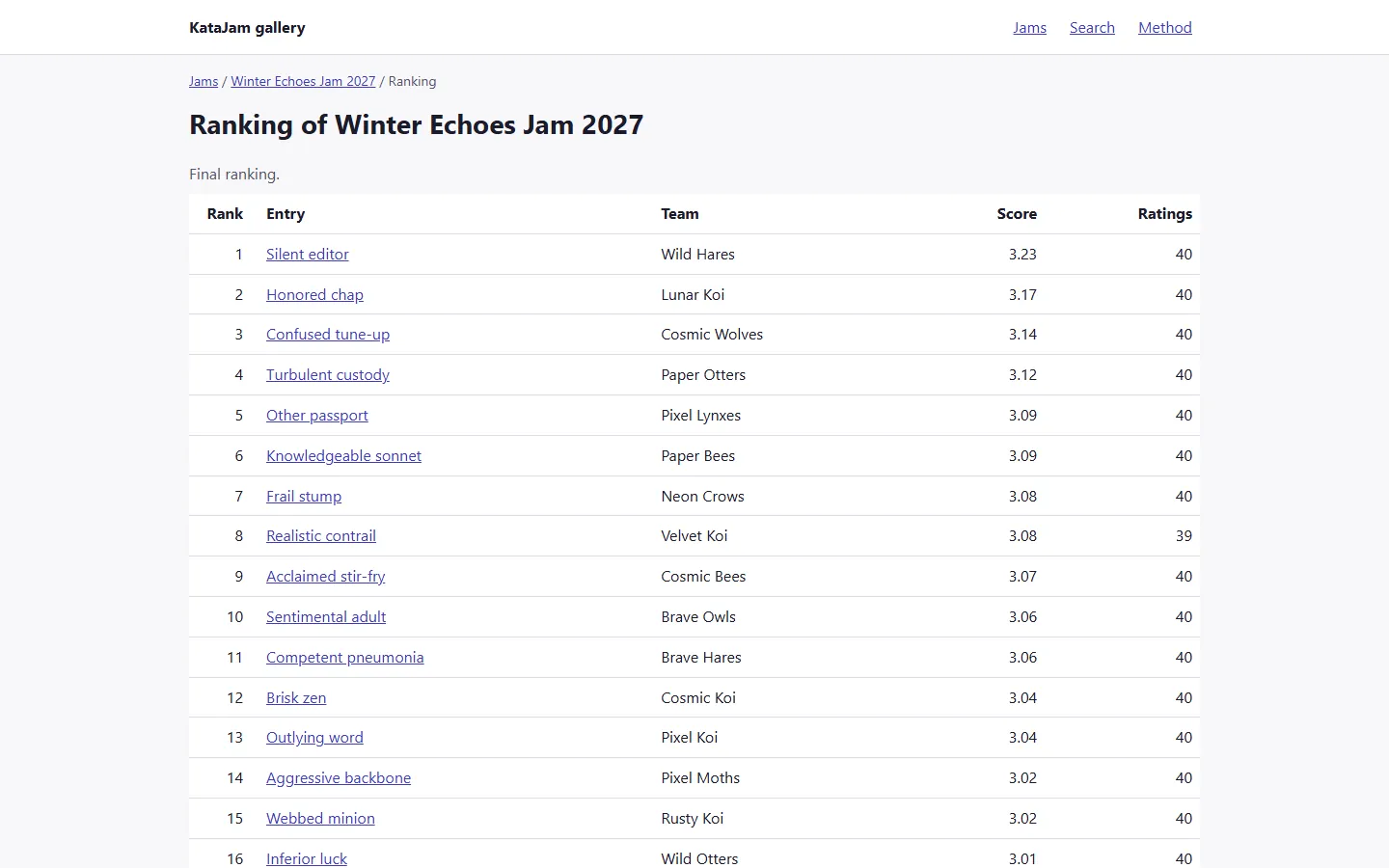
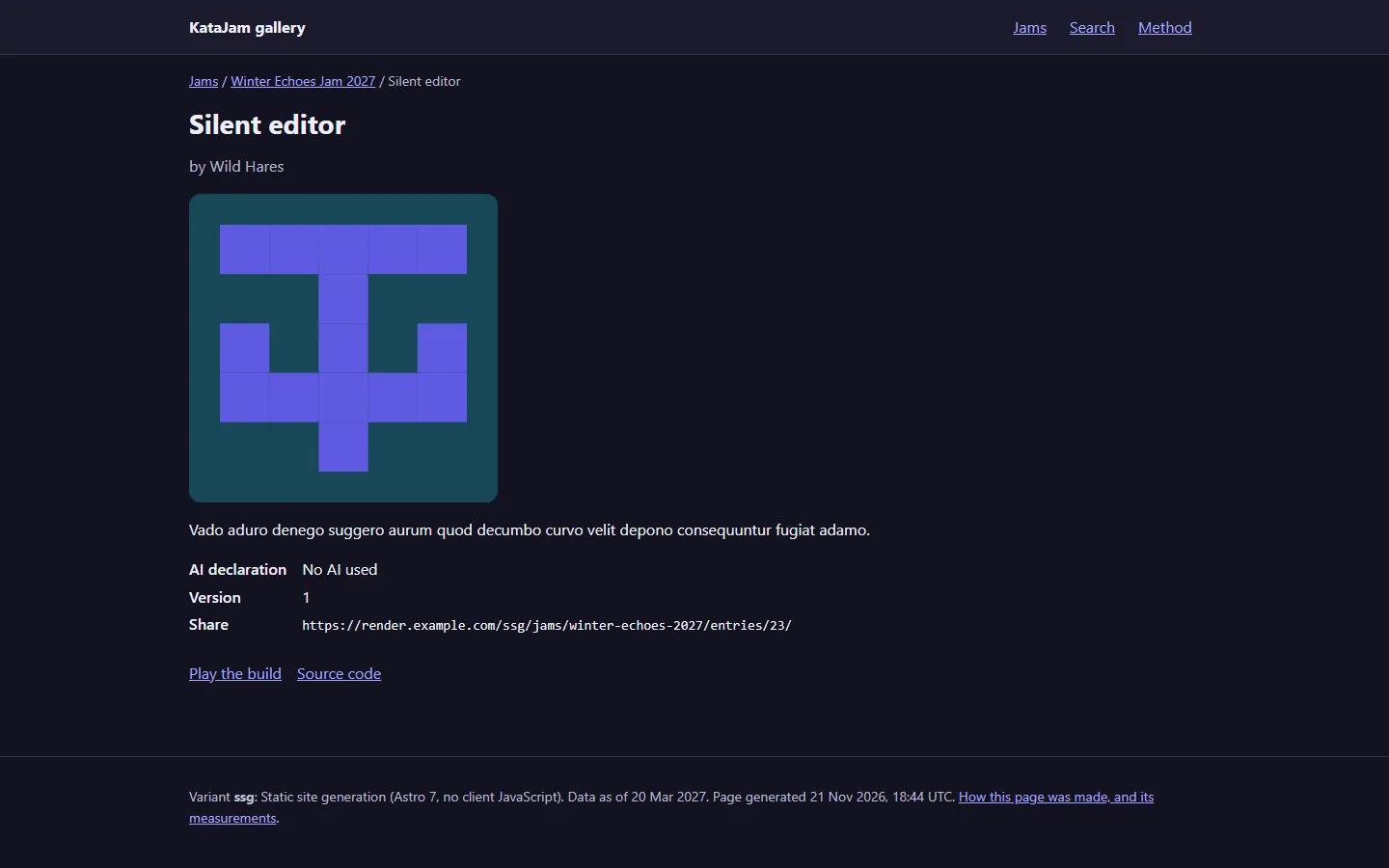
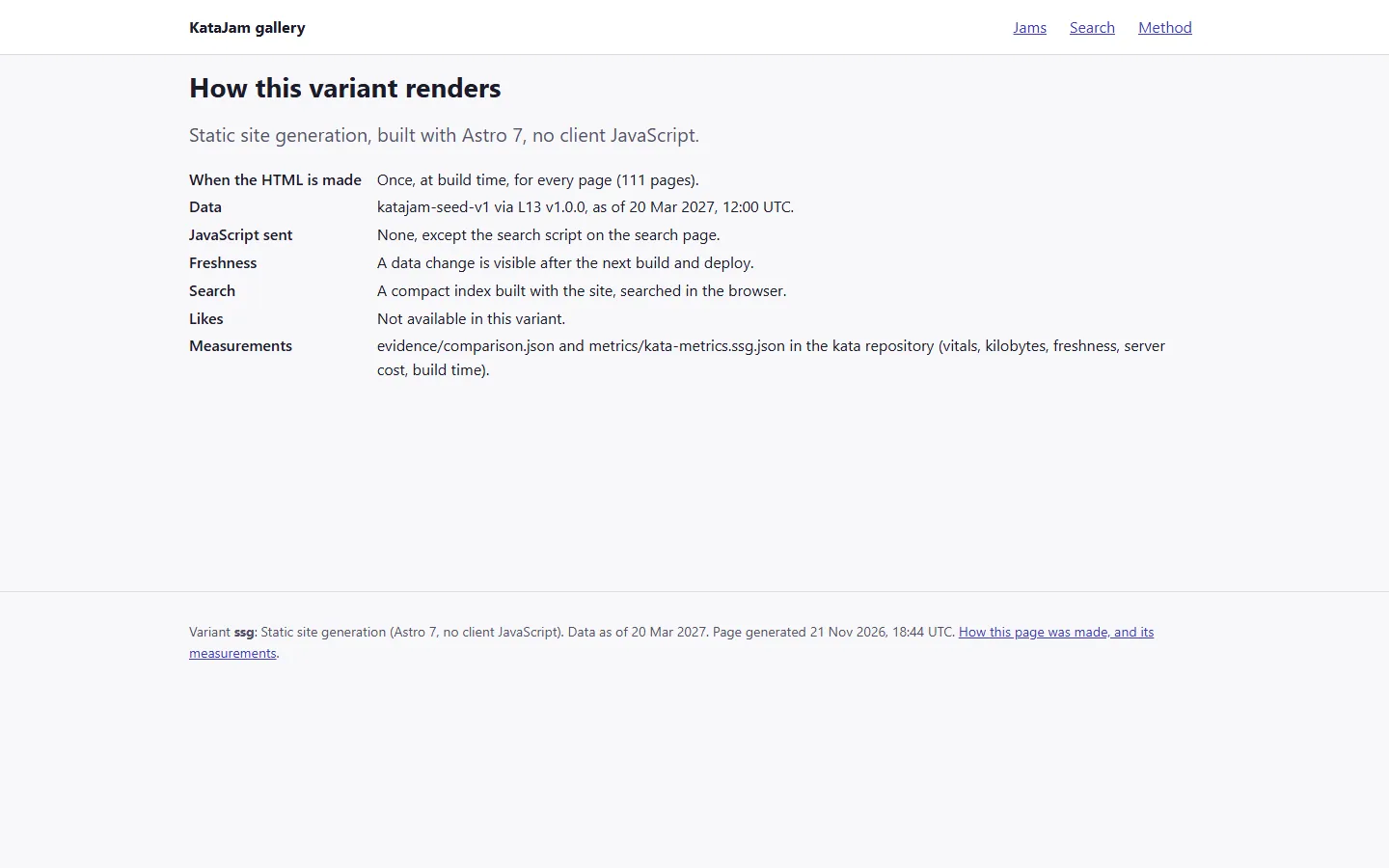
- L22: one gallery as CSR, streaming SSR, SSG, ISR and islands, matching within 1 % of pixels; the same 12 flows pass on every variant.
- L22: a decision matrix built from the numbers, with when not to use each strategy.
Highlights
module federation, runtime composition, rendering strategies, web vitals