Resolvo
Autonomous incident triage and remediation with human-in-the-loop
Technical title: Enterprise Agentic Triage Engine
The code lives in a private repository; this sheet and the demo, when there is one, show the work.
- Status
- Case study
- Type
- Enterprise AI system
- Period
- November 2026 – December 2026
- Role
- Architect and sole engineer
- Domains
- ITSM, AIOps
- Stack
- Python, LangGraph, Java, Spring Boot, PostgreSQL, pgvector, Kafka, MCP, OpenTelemetry
 Resolvo Case study
Autonomous incident triage and remediation with human-in-the-loop
Enterprise AI system
Context and problem
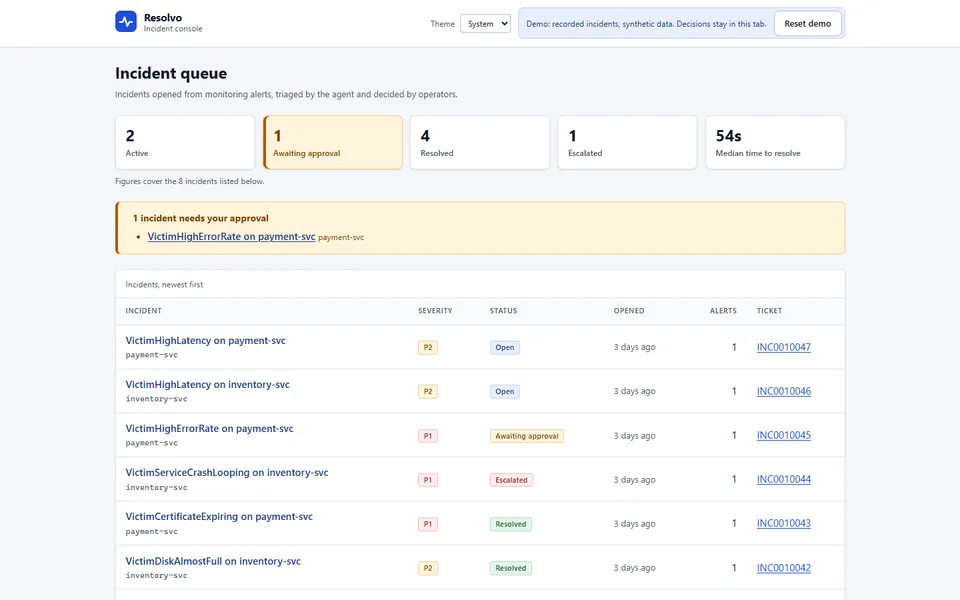
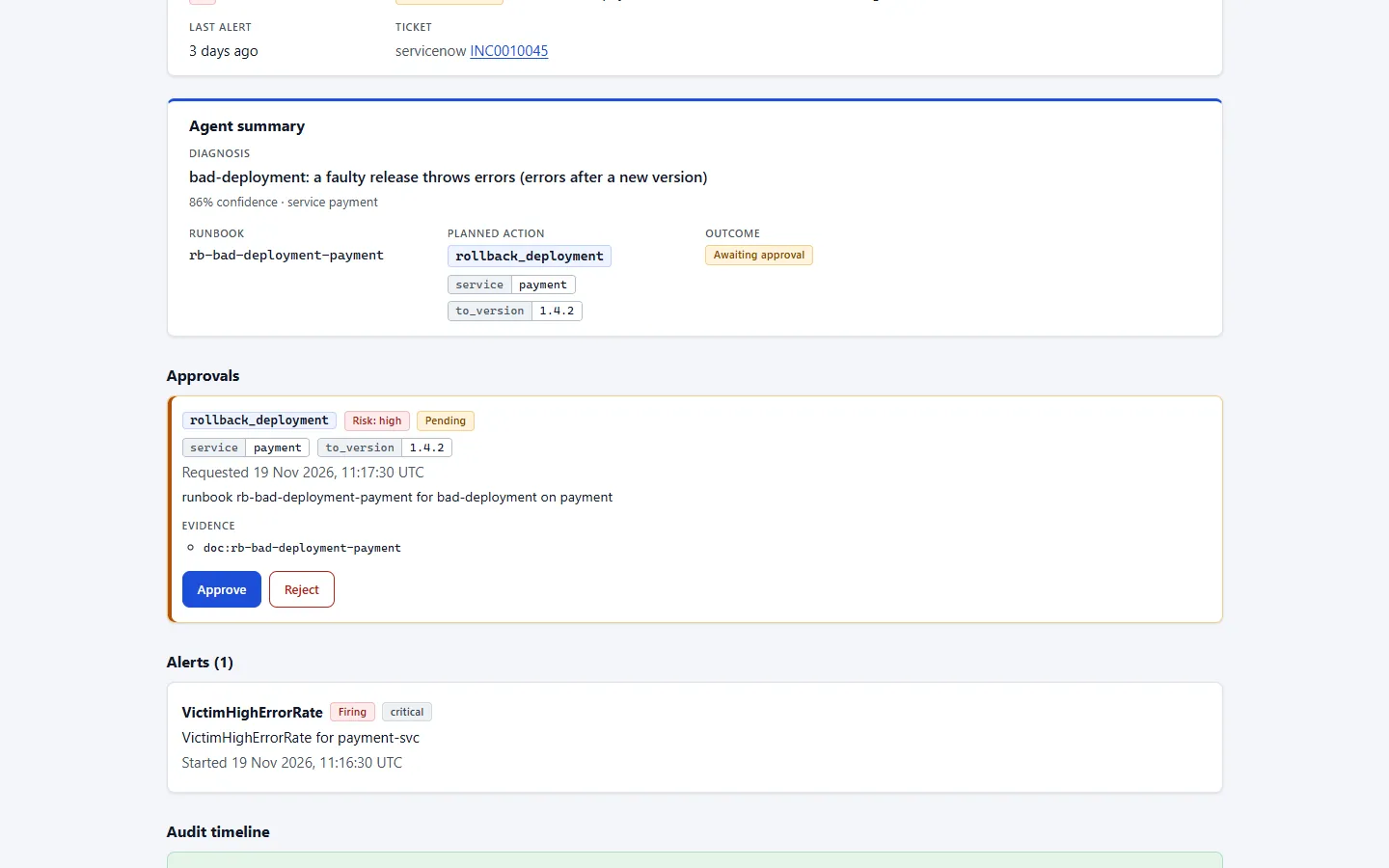
Agent-driven triage for enterprise incidents: classify, enrich and route in seconds, with a human in the loop.
L1/L2 support teams lose time on every incident to manual triage: reading the alert, gathering context and routing it.
Inspired by an incident triage automation I designed in a production role, which cut triage time by 92% (from 20 minutes to under 90 seconds per incident).
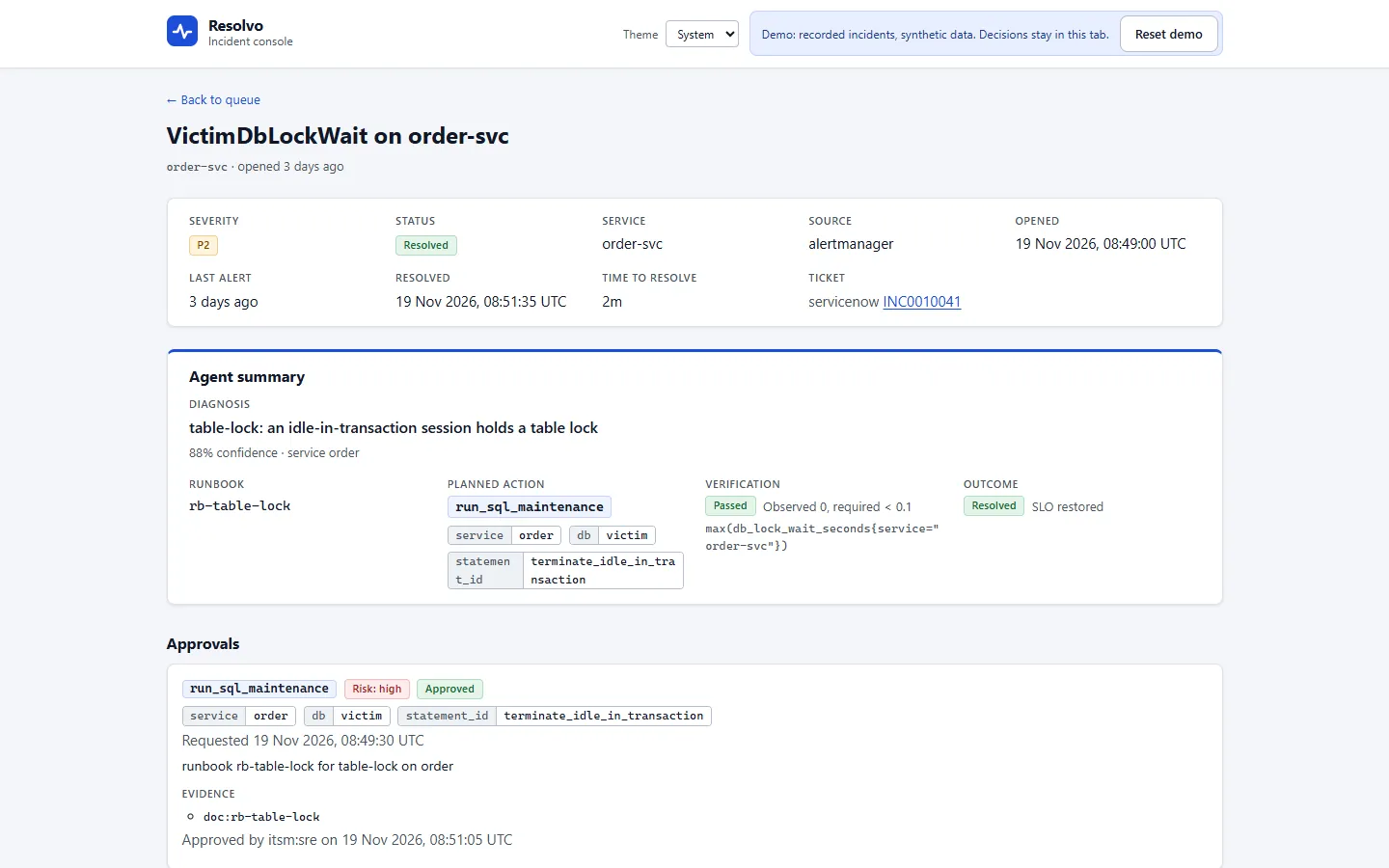
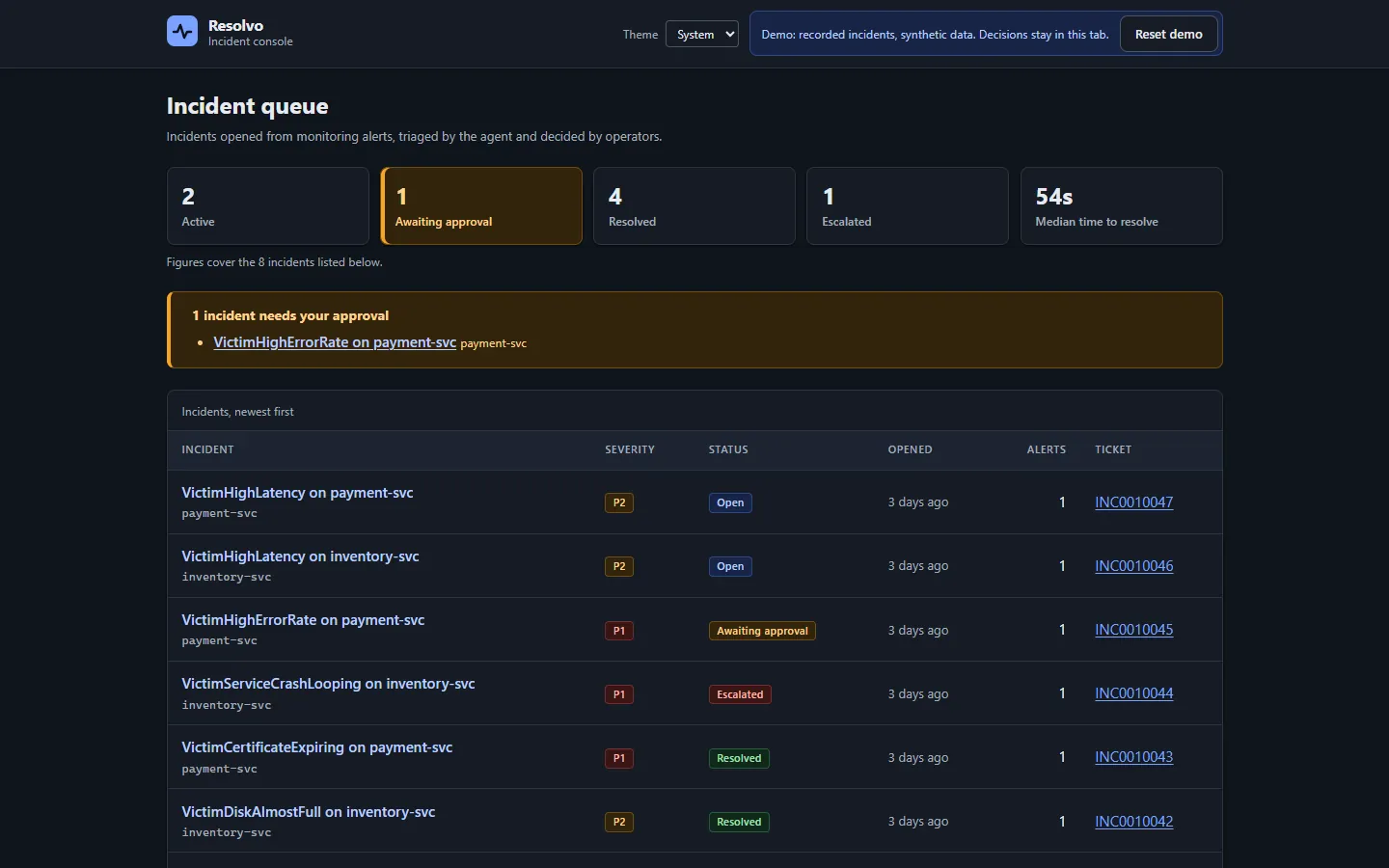
Support teams lose hours per incident to manual triage. Resolvo turns alerts into reviewed remediations in minutes, with every action logged and approved.
Screens
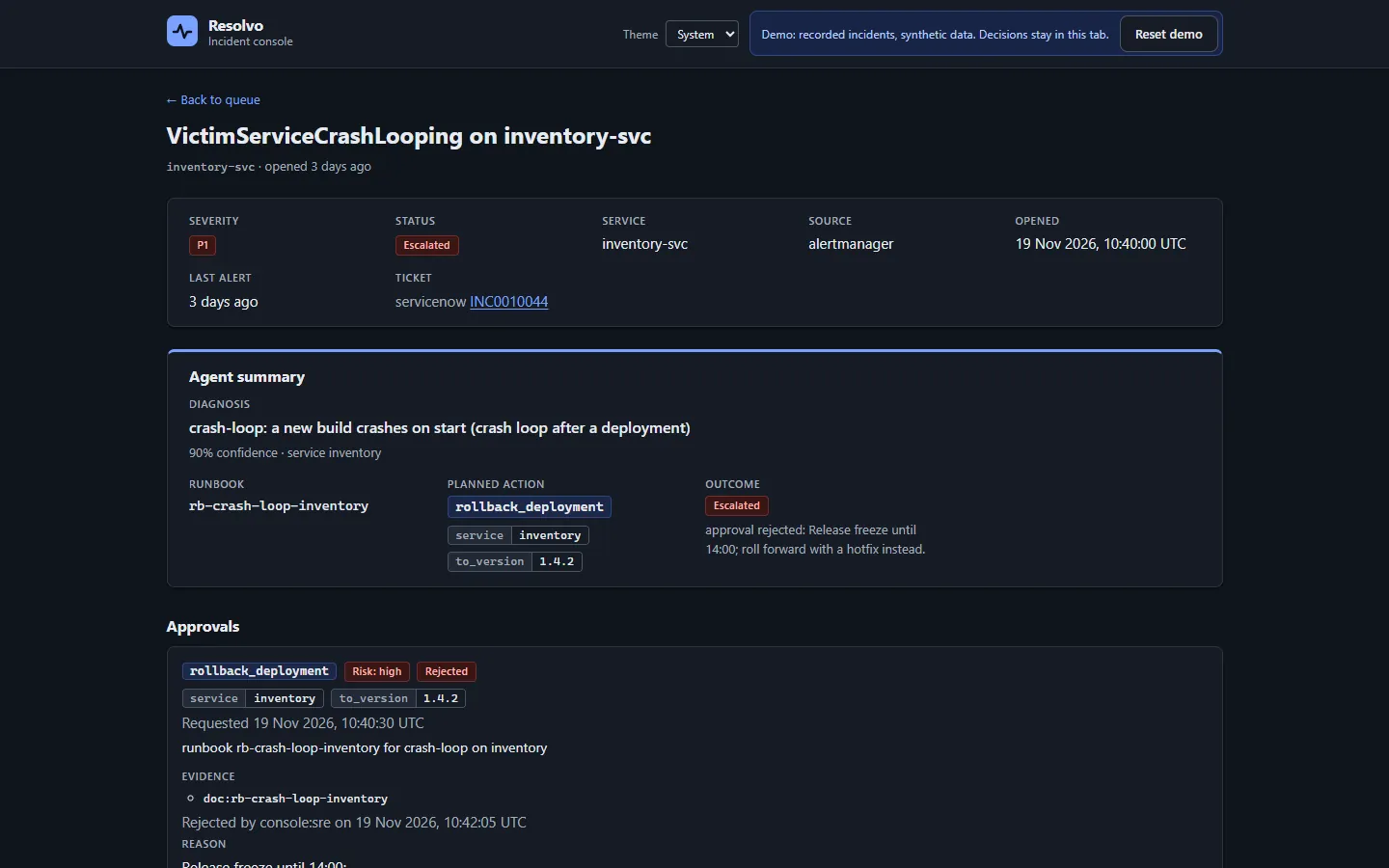
Architecture and interfaces
- Provides
- events incident.*, mcp resolvo, api resolvo-api
- Consumes
- mcp threadline, events outage.* (tideline)
- Data keys
- user_code, request_id, endpoint, error_code
Decisions and trade-offs
- A Java domain service (Spring Modulith, checked with ArchUnit) and a separate Python agent runtime that talk only through an outbox and REST, instead of all Python or all Java: LangGraph checkpoints and interrupts exist only in Python, and the domain must outlive the agent framework. (ADR-0002)
- Spring JdbcClient with explicit SQL and Flyway, instead of Spring Data JPA: advisory locks, FOR UPDATE, a gapless hash-chained audit and pg_notify in the same transaction depend on exact SQL, not on ORM behaviour. (ADR-0005)
- Agent tools behind three MCP servers, each with its own token, dry run by default and SQL picked from a closed list of statement ids, instead of runbook tools driving Docker through its socket: that socket would hand the agent root on the host. (ADR-0008)
- LangGraph with Postgres checkpoints and an outbox consumer (LISTEN/NOTIFY with a polling fallback), instead of CrewAI or AutoGen and a message broker: pending approvals survive restarts, with no broker to run. (ADR-0009)
- A deterministic offline model behind the same port, with every metric labelled offline mode, instead of blocking the release until a provider key exists or running a small local LLM on CPU (too slow): the numbers never pretend to be LLM quality when no LLM answered. (ADR-0007)
Related projects
- Specgate: works with it directly: one offers an interface the other uses
- Tideline: works with it directly: one offers an interface the other uses
- Forgeline: shares data and a standard interface with it
- Revela: shares data and a standard interface with it
- Sublingua: shares data and a standard interface with it
- Vigilo: shares data and a standard interface with it
Highlights
durable agents, human in the loop, MCP tools, OpenTelemetry GenAI, hybrid RAG